1
/
of
1
Read Room
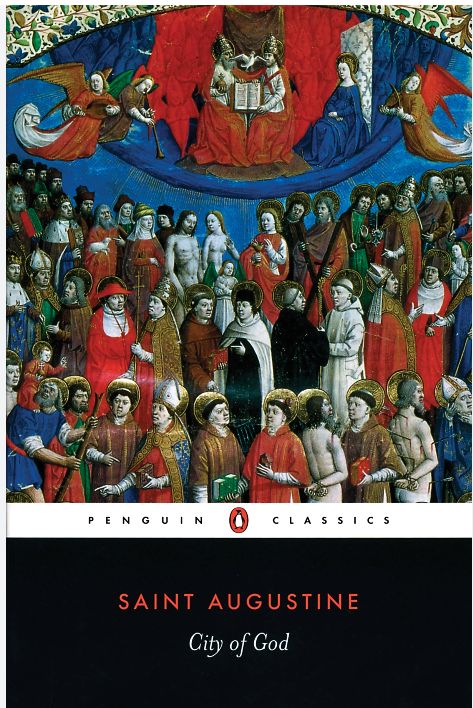
The City Of God Book by Saint Augustine
The City Of God Book by Saint Augustine
Regular price
Tk 970.00 BDT
Regular price
Tk 1,100.00 BDT
Sale price
Tk 970.00 BDT
Quantity
Couldn't load pickup availability
The City of God is a foundational philosophical and theological treatise written by Saint Augustine. It contrasts two invisible, spiritual realms: the City of God (those predestined for salvation who love God) and the City of Man (those consumed by self-love and earthly power).
The Core Premise
Augustine wrote the 22-book treatise in response to the Sack of Rome in \(410\) \(CE\). Pagans blamed the disaster on the abandonment of Rome's traditional gods for Christianity. Augustine fundamentally challenged this, arguing that Rome's fall was a consequence of its own internal moral decay.
Structure & Main Themes
The work is divided into two primary sections:
-
Part 1: Apologetics (Books 1–10)
- Rebuts pagan claims that Rome's traditional gods were the source of its worldly success.
- Argues that earthly, pagan empires are fundamentally driven by pride and the "lust for domination."
-
Part 2: Theology of History (Books 11–22)
- Explains the origins, progress, and ultimate destinies of the two cities, based on biblical history.
- Reframes human history as a linear, God-directed narrative stretching from Creation to the Last Judgment.
The "Two Cities"
These cities are not literal physical places, but symbolic representations of the ultimate loves and loyalties that govern human lives:
- The City of God (Civitas Dei): Built on the love of God, humility, and contempt for selfish desires. Its citizens prioritize divine truth over worldly gain.
- The City of Man (Civitas Terrena): Built on the love of self, pride, and the desire for domination. It includes all human institutions that prioritize temporal power and secular success.
Historical Significance
Augustine emphasized that these two cities are inextricably intermingled on earth and cannot be perfectly separated until the Last Judgment. His work is considered a masterpiece of Western thought, profoundly shifting political theory away from the idea that any earthly empire (including the Church) can achieve a perfect utopia in this
Share